
Category Archives: Judaism

Israel in Siberia? I Think Not.

untitled

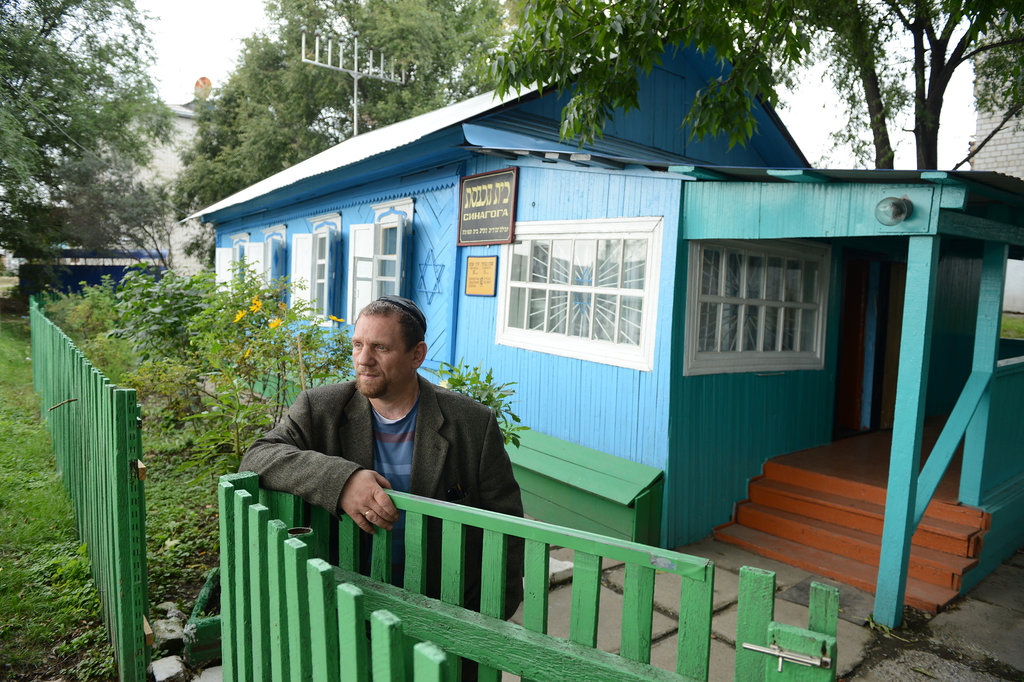
A homeland for Jews—before there was an official Israel, an “alternative” was created in Siberia. Called the Jewish Autonomous Region, it was Stalin’s experiment to increase the population in an undesirable area while exiling a hated minority. (Sounds like a repeat of the Pale of Settlement? Yeah, it was…)

For obvious reasons, the Siberian idea never caught on with any widespread enthusiasm. For centuries, Jews of Russian descent emigrated to escape pogroms, unjust laws, and a low standard of living. My own family, who originally hails from Lithuania and the Ukraine, were among them. When they left, in the early 1900’s, a Jewish State in the Middle East was just a dream. The only place on their radar was America.

In modern times, the majority of Jews are living in two places: Israel and America. Almost every country around the world has a micro community, but none are thriving, and very few of us would willing join one (I certainly would not). So when the NY Times recently published an article claiming Siberia’s “Jewish Homeland” has appeal, I was quite surprised.

Just because the area has a Yiddish street sign, a Chabad center, and some Judaica around town does not make it a homeland, anymore than I’d call Crown Heights a homeland. What makes Israel our Homeland is that it’s an expressly Jewish State, within Biblical borders, whose sole purpose is to provide safe haven for all Jews, everywhere, should the need arise. In times of trouble, no Jew has ever considered Russia their solution.

Mind you, I am not against the Siberian community. I love Jewish culture and I think it’s wonderful that the area’s heritage is being preserved. Would I visit? Sure. But I could never call it home.

ih

Is it possible to have a viable Jewish Homeland outside of Israel? (I vote no.)
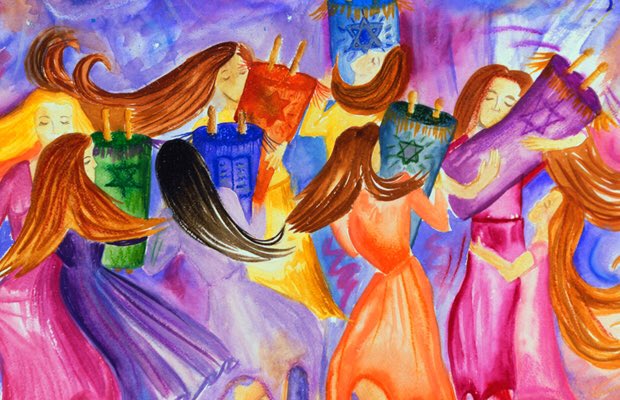
 

Photo Credit

Making Simchat Torah Fully Inclusive

cvjafnyvuaezaqo

Whose Torah is it, anyway?” Author Laura Ben-David asks this pointed question in her article about Simchat Torah. (The obvious response would be that the Torah is everyone’s, right?) If you’re Orthodox, the answer may not be clear. Some members of that community do not allow women to dance with the Torah, even though it’s customary for the other branches of Judaism to do so.

Coming from a Reform background, exclusions like this not only mystify me, they make me sad. I respect tradition and I think it’s fine that each synagogue observes in its own way. I’m not against Orthodoxy; I’m for progress—and there is a difference. Denying women the right to observe a holiday the same way that men do, with no Halachic reason, is just plain wrong!

Simchat Torah is about rejoicing. How can women rejoice if we can’t dance, sing, or be called up for an Aliyah? It would be impossible. That’s why I believe this holiday, and all the others, needs to be fully inclusive—for men, women, and children. If the Orthodox wish to worship separately, that’s their right, but don’t deny women a critical part of the celebration.


Share your opinion. Do you think women should dance with the Torah? Why or why not?

Remembering the Hungry During Sukkot

sharing-food-1024x683

Sukkot is a wonderful holiday. It commemorates the 40 years of wandering that the Jewish people endured as they traveled across the Sinai desert. In modern times, we recreate it by building temporary dwellings called Sukkahs which we use for a week of feasting and fun.

The annual ritual always reminds me of the many blessings in my life: family, friends, faith, and food. Sitting comfortably in a beautifully decorated hut while sharing an elaborate dinner is a true joy! It’s hard to be sad with such abundance all around. Most of us have so much and we don’t even realize it…

But what about those who are less fortunate? Instead of celebrating, they are struggling, not for luxury but for basics. There is no feast for them, maybe no food at all! Those of us who are in a position to help—and most of us are—need to think about others. In Biblical times, hungry people were fed through gleaning (collecting leftover crops from fields after the  harvest). Today, gleaning is rare, but food pantries are everywhere. 

Food is a universal need all humans share. In America, it’s almost impossible to die from starvation, but it’s common to be under-nourished. During Sukkot, as we feast, we must remember the hungry and try to alleviate their pain. If you’re able, set aside a box of cans, dry goods, and anything else you can spare. Find a local charity and donate today.

“Denial” is a Major Victory for Holocaust Truth

ee3

Holocaust scholar Deborah Lipstadt’s experience with a bizarre lawsuit has been turned into an exciting courtroom drama starring Rachel Weisz (can you believe the normally gorgeous actress sported short, red, frizzy hair for the part? Wild!).

Sued in 1996 by notorious Anti-Semite and historical revisionist, David Irving, Ms. Lipstadt is forced to spend considerable time, money, and effort to prove that she is the one telling the truth (hard to believe, but British libel laws are very different from the America law. Over there, the burden is on the defendant). History on Trial: My Day in Court with a Holocaust Denier, the book that the film is based on, is equally engaging.

Denial isn’t just a good movie, it’s an important victory for Holocaust truth. People can have different opinions, but they can’t have their own set of facts. The Holocaust did happen, millions died, and that should never be up for debate!