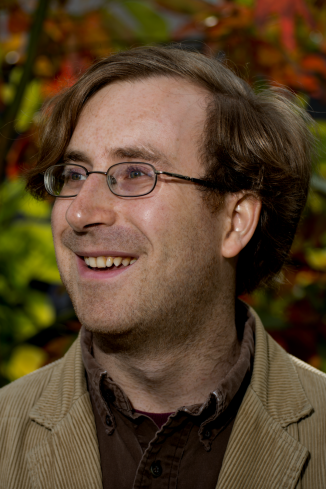
One of the best things about blogging is getting to meet new people. Ezra Donner and I connected through Twitter and he graciously agreed to be interviewed. Ezra is an exceptionally talented person, whose music has been played at the world-renowned Carnegie Hall. He’s a composer, performer, and educator who can be found at
http://ezradonner.com/. His latest project, “Mountain Suite,” is set to debut on Earth Day. Read on to learn more about this fascinating individual:
Q: At what age did you develop an interest in music?
A: As a child I had many interests, including music, and also cartooning, video games, and TV shows like “The Simpsons.” But music has played an important role in my life from the beginning. I would say that I became “serious” about music around the age of 12 or 13. Since high school and in college, it has become more and more of a focus in my life.
Q: Do you come from a musical family?
A: Yes, I would say so. From a very early age I was exposed to many different kinds of music. My father has musical training in composition and piano, and schooled me in the great works of Classical music from a young age. My mother, though not a trained musician, also immersed me in a lot of good music, particularly popular music of the 60’s and 70’s, and music from the Golden Age of Broadway Theatre. My sister is a musician as well and studied French horn in high school.
Q: You are a musician, composer, and a teacher. Which of these roles means the most?
A: It’s hard to say. I think I’m a better composer because I play the piano, a better pianist because I teach, and a better teacher because I compose. But I guess it all starts with composers. Without them we wouldn’t have any music to play or teach, after all!
Q: Who is your favorite composer, living or dead?
A: It’s hard to pick just one. I love the great American composers of the 20thCentury, including Charles Ives, Aaron Copland, and Samuel Barber, as well as pre-War European masters like Béla Bartók and Igor Stravinsky. But I also hold a special place in my heart for 19th-Century composers like Brahms and Schumann. Like them, I like to draw inspiration from nature, and I share their respect for tradition. In particular, I think Brahms understood better than anyone that he was part of a rich and well-developed musical lineage. For living composers today, this is all the more true–we have all the great music that Brahms had, plus all the great music written since then.
Q: Do you like contemporary music?
A: I like a lot of living composers, including Steve Reich, John Adams, John Corigliano, William Bolcom, and Louis Andriessen. At the same time, I think I draw my greatest inspiration from the composers of the past.
Q: What effect do you think music has on society?
A: Music is central to human society–try living without it! We use music to mark all of our important occasions: weddings (“Here Comes the Bride”), funerals (“Taps”), graduation (“Pomp and Circumstance”), the New Year (“Auld Lang Syne”), and so on. Albert Einstein said that musical intuition was the driving force behind his idea for the theory of relativity. Any society that does not recognize the power of music, does so at its own peril.
Q: Is your music influenced by your Jewish faith?
A: Yes, I think my Jewish identity is a big part of my music. I grew up hearing and singing a lot of good music in Temple, and as I got older, I became increasingly interested in all of the wonderful musical traditions of Jews in America. This includes the Classical sphere, but also Broadway, Jazz, Rock ‘n’ Roll, and music from film and television.
Q: What are your interests outside of music?
A: Outside of music, my interests include science, poetry, history, and board games.
Q: Do you have a favorite song?
A: Again, it’s hard to pick just one, but Brahms’ German Requiem, Copland’s Fanfare for the Common Man, and Barber’s Knoxville: Summer of 1915 come to mind.
Q: Describe the process of composing.
A: Composing is anything but a process! It’s more like finding your way across a dark room. You start with a few basic ideas, maybe, about where you are and where you want to go, but then you just grope and stumble your way around for a while without knowing exactly how you will come out. Sometimes you can find a light switch, sometimes you just find your way in the dark, and sometimes you stumble around without trying to bump into too many things. When I’m working on a piece, I often feel like the piece has a destiny and a shape all its own–I’m just there to listen carefully and try to take dictation the best that I can. Of his landmark work, The Rite of Spring, Igor Stravinsky said, “I was guided by no system whatever in The Rite of Spring….I heard and I wrote what I heard. I am the vessel through which The Rite of Spring passed.” I always feel like whenever a piece is “finished,” it’s merely a snapshot of where my musical thinking was at that particular moment. Deadlines help.
Absolutely illuminating! Also, I’m pleased to announce that Ezra is accepting new clients looking to commission music! Personally, I can’t think of a more unique gift than that. Full details can be found here http://ezradonner.bitnamiapp.com/commission-a-work/
Do you like classical music?
Like this:
Like Loading...