
Author Archives: The Jewish Lady

Texas Jewish Community Attacked

a3a3

The Jewish Community of San Antonio, Texas was attacked on August 12. Dozens of homes and cars were vandalized with anti-Semitic graffiti—swastikas and the letters “KKK” were spray-painted on Jewish memorials and  “Jew” was painted on an SUV.

This stomach-turning terror incident took place in a predominantly Orthodox neighborhood where Congregation Rodfei Sholom is located and 300 families live.

Hate crimes like these upset me terribly! It seems like they happen so frequently and the public reaction is often apathetic, but not this time. Pastor John Hagee was quoted as saying, “An attack on the Jewish community should be considered an attack on the Christian community.” (Additional comments/info can be found here.) Hagee has been a strong and vocal supporter of Israel for decades and has done a lot of Interfaith outreach between Christians and Jews.

I believe it’s an attack on EVERY community, and it’s refreshing to see folks from different faiths recognize that. These crimes won’t stop occurring until good people band together and denounce these cowards. Anti-Semitism isn’t just a Jewish problem, it’s a human problem.

Letting Go of Perfection

a3

I thought today would be a good day. It started off well enough; I was up by 6:00 am and headed into the kitchen. Lately, I’ve been craving beef stew and I was excited to do some cooking. While the meat was browning, I chopped veggies, listened to the radio and drank some coffee. Everything was calm, and quiet, and there shouldn’t have been a problem.

Then, I discovered I was out of garlic. Immediately, I started panicking and having ridiculous thoughts:

Dinner is ruined…What a waste…I’m so dumb…

It didn’t matter that I had 99.99% of the needed ingredients. Because one was missing, I felt like a complete failure, and I no longer wanted to cook at all. If it wasn’t perfect, what was the point?

Throughout my life, I’ve struggled with these feelings. Growing up, I was surrounded by highly opinionated, extremely negative relatives who constantly criticized everything and everyone. I was often scared of being ridiculed and in turn, I dealt with it by becoming a perfectionist.

Even though I’m grown up now, and nobody is making demands of perfection anymore, the feelings remain. I still want life to be perfect. I want to look perfect, act perfect, I want to be perfect

That desire for perfection causes constant struggle and puts me in a pressure cooker state of mind, trying to attain something that doesn’t even exist, and making me feel inferior because of a simple mistake that didn’t hurt anyone.

So, I took a 15 minute break and a deep breath, and went back to my cooking. I finished the recipe, minus the garlic, and it’s simmering away on the stove now. It looks fine and I’m sure will taste fine as well. Tons of worrying, for nothing. 

I’m trying to let go of perfection. It’s a struggle, maybe one I’ll always deal with, but it’s worth the effort. If we want to lead authentic lives, we have to accept reality: Nothing is perfect and anyone claiming otherwise is just fake. 

Meet Homepolish’s Interior Design Specialists

Homepolish Designer Home Tour: An Airy Home Full of Worldly Treasures

This post contains affiliate links and I will be compensated if you make a purchase after clicking through my links.

Have you ever wondered what it’s like to have an interior designer in your home? It’s no longer just a fantasy with help from the interior design start-up Homepolish. They make it easy (and affordable!) to get an interior designer in your home who will help create the perfect space for you. The experience is truly one of a kind so we decided to break it down for you in three easy steps:

1. Let the designer get to know you.

Tell them the bare bones: are you interested in working on a home, office, store or something else? How big is it? Do you have a project budget? Do you own or rent? And then tell them the juicy stuff: What inspires you? What does your ultimate dream space look like? From picking paint colors to gutting a brownstone, they can handle any project, any size.

2. The first date, aka meet your designer.

Here’s what happens during your initial 1 hour consultation: you and your designer meet, they tour your space, you guys chat. Then your designer follows up with a few design options for improving your home or office. They start with a one hour consultation so that their designer can understand your goals, needs and wants. Communication is the foundation to every healthy relationship!

Homepolish wants the relationship between you and their designer to be as stress-free and helpful as possible. If during the initial consultation, you and your designer don’t get along perfectly, Homepolish will tweak the matchmaking process and send another on the house. The initial consult is $50 or $80 (Junior and Senior rates). If you’re over it, there’s no pressure to buy hours after the consult.

3. Purchase your designer’s time.

One of the many reasons Homepolish is unique to the interior design world is because you purchase time by the hour. Every hour is spent working on what you need – from picking paint colors to sending you furniture options to renovating your loft. Whatever the size and however complicated your project is, they are there to help! Junior designers’ time costs $100/hour, Seniors’ cost $130/hour and they have two package options: a Single Day session (three hours) and The Design Package (as much time as you want with a minimum purchase of ten hours).

Homepolish Designer Home Tour: An Airy Home Full of Worldly Treasures
  

Save time and money, sign up with Homepolish and rework your space with an expert!

Friends of the Earth Bee Friendly Gardens

aaa

As a gardener, I’m very concerned about bees. Anyone who’s ever been stung by a bee may think that’s strange and curse these insects, thinking all they do is sting, buzz, and create a general nuisance. But in reality, bees are essential for 2/3 of our food supply! Without pollination, plants won’t produce and there will be a huge food shortage. Talk about bee-ing misunderstood!    

Bees are dying at alarming rates, and neonic pesticides are a key contributor to the problem based on a strong and growing body of science:

  • Beekeepers have lost an average of 30% of their hives in recent years, with some beekeepers losing all of their hives and many leaving the industry. This is too high to be sustainable.
  • Recent losses are staggering making it difficult for beekeepers to stay in business and for farmers to meet their pollination needs for important crops like almonds and berries.
  • A growing body of science implicates neonic pesticides – one of the most widely used class of insecticides in the world, manufactured by Bayer and Syngenta – as a key factor in recent bee die-offs.
  • Neonics can kill bees outright and make them more vulnerable to pests, pathogens and other stressors while impair their foraging and feeding abilities, reproduction and memory.
  • Neonics are widely used in the U.S. on 140 crops and for cosmetic use in gardens. Neonics can last in soil, water and the environment for months to years to come.
  • Neonics are also harming other helpful insects and animals critical to sustainable food production and healthy ecosystems, like wild bees, butterflies, dragonflies, lacewings, and ladybugs, birds, earthworms, mammals and aquatic insects.

a3

In the face of mounting evidence, a growing number of responsible retailers have decided to be part of the solution to the bee crisis:

  • Home Depot, the world’s largest home improvement store has decided to label plants with neonicotinoids and is working with its suppliers to “find alternative insecticides for protecting live goods and bees.
  • Lowe’s, the second largest home improvement retailer in the world, made a public commitment to eliminate neonicotinoid pesticides from its stores including products and plants treated with them, redouble existing integrated pest management practices for suppliers and provide additional material educating customers about pollinator health.
  • Whole Foods issued a new product rating system, which identifies pollinator protection as a priority by restricting neonicotinoid pesticides.

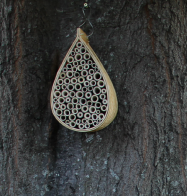
As consumers, we can patronize those bee-friendly companies and do more to encourage their health. Friends of the Earth has recently begun their Bee Action Campaign to help educate, engage, and organize to help protect bees and other essential pollinators. They have created these amazing bamboo bee houses.

aa3

The bee house is designed to attract mason bees, who are non-stinging super-pollinators. Each mason bee can visit as many as 1,000 blooms everyday, which is 20 times more than a honeybee. I am so excited to have my own bee house now and I encourage everyone else to get one and also to provide ample water.

Another fun thing to do is host a brunch for bees. All folks need to do is snap two pictures of themselves around their brunch table. One with everything pollinated by bees and one without. There are materials including a how-to kit, sample menu, sign, and social media content. It can all be viewed here.

aaa